Look, I get it. You are standing on a street corner, your head is pounding because you haven’t had a single drop of caffeine yet, and you are staring at your phone typing gluten free coffee near me into Google like your life actually depends on it.
Because for us, it kind of does.
Being 22 and living with a gluten intolerance or Celiac disease is a whole personality trait at this point, but not the fun kind. It is the kind where you have to interrogate a teenager behind a counter about the brand of oat milk they use while a line of ten people huffs and puffs behind you. It is exhausting.
You just want a vanilla latte that won’t make you feel like you swallowed a bag of angry bees. Is that too much to ask?
Apparently, in the year 2026, it still can be. Coffee should be simple. It is literally just bean water. But then the world had to get complicated with syrups, cross-contamination, and the ultimate betrayal: non-certified oat milk.
If you are tired of the “gluten-free gamble” every time you walk into a cute cafe with exposed brick and succulents, this guide is for you. We are going to find you a safe cup of joe without the side of stomach cramps.
Is Coffee Actually Gluten Free?
Let’s start with the basics because there is a lot of misinformation out there. Pure coffee beans? Totally fine. They are naturally gluten free. If you are brewing a black coffee at home from whole beans, you are in the clear.
The problem starts the second those beans leave the farm.
Sometimes, flavored coffee beans are treated with syrups or powders that use barley-based carriers. If you see “Highlander Grogg” or some weird “Cookie Dough” flavored bean at the grocery store, check that label twice.
But the real drama happens at the coffee shop.
When you search for gluten free coffee near me, you aren’t just looking for a place that sells coffee. You are looking for a place that understands the assignment. You need a barista who knows that the “malt” in a chocolate frappe is a one-way ticket to a bad time.
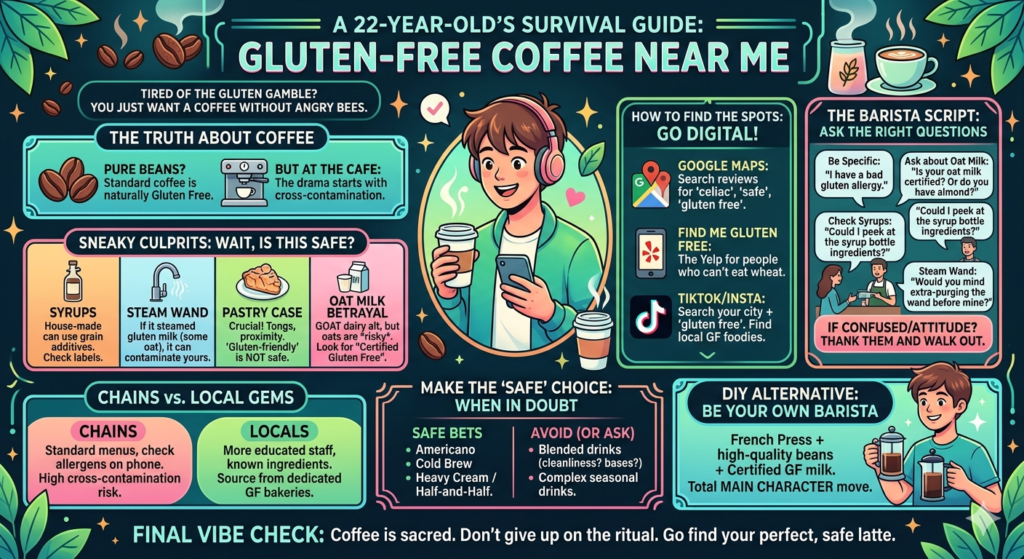
The Sneaky Culprits: Where Gluten Hides
You’d be surprised where this stuff lurks. I’ve had my heart broken more times by a seasonal syrup than by any Tinder date.
First up: Syrups. Most big-name brands like Monin or Torani are usually safe, but house-made syrups are a wild card. Some cafes use thickeners or flavorings that contain grain-based additives. If they can’t show you an ingredient list, skip the pumps and go for a plain latte.
Second: The Steam Wand. This is the big one. If the person in front of you ordered a drink with a milk alternative that contains gluten (looking at you, certain oat milks), and the barista doesn’t properly purge and wipe the steam wand, you are getting cross-contaminated.
It sounds high-maintenance, but for people with Celiac, that tiny bit of residue is enough to ruin an entire weekend.
Third: The “Gluten-Friendly” Pastry Case. If a shop has “gluten-free” muffins sitting right next to the regular croissants without a barrier, they aren’t gluten free. They are “gluten-adjacent.” The crumbs are flying everywhere. If they use the same tongs for both? Game over.
The Oat Milk Betrayal
We need to have a serious talk about oat milk. It is the GOAT of dairy alternatives. It’s creamy, it foams like a dream, and it doesn’t taste like cardboard.
But oats are notorious for being processed in facilities that also handle wheat and barley.
Unless the cafe is using a brand that is specifically labeled “Certified Gluten Free” (like certain versions of Oatly or Califia), you are taking a risk. Many baristas think all oat milk is safe because oats don’t naturally have gluten. They don’t realize the cross-contamination happens in the fields and the factories.
When you are looking for gluten free coffee near me, checking the “milk situation” is priority number one.
How to Find the Best Spots Near You
So, how do you actually find the spots that won’t betray you? You have to be a bit of a digital detective.
Google Maps is your best friend, but you have to use it right. Don’t just look at the star rating. Search within the reviews for keywords like “celiac,” “gluten free,” or “safe.” People who have had a good experience are usually very loud about it because we are so relieved to find a safe haven.
TikTok and Instagram are also goldmines. Search for “[Your City] gluten free” and see what pops up. Usually, there is a local “GF foodie” who has already done the legwork and filmed a 15-second clip of their safe oat milk latte.
There is also an app called “Find Me Gluten Free.” It is basically Yelp for people who can’t eat wheat. It’s a lifesaver when you are traveling or in a neighborhood you don’t know well.
The Barista Script: How to Ask Without Being “That Person”
I know, social anxiety is real. You don’t want to be the person making a scene or being difficult. But your health is more important than a stranger’s opinion of your order.
Here is how I usually handle it without feeling like a diva.
Instead of asking “Is this gluten free?” (which usually gets a distracted “yeah, probably”), try being specific.
“Hey, I have a pretty bad gluten allergy. Do you know if your oat milk is certified gluten-free, or do you have almond milk instead?”
“Is the vanilla syrup made in-house, or do you have a bottle I could peek at the ingredients on?”
“Would you mind extra-purging the steam wand before making mine? I really appreciate it.”
Most baristas are actually super cool about it if you are nice. They’ve seen it all. If they give you an attitude or look confused, that is your signal to thank them and walk out. No coffee is worth the “gluten fog.”
Chains vs. Local Gems
It’s a toss-up.
Big chains like Starbucks are actually pretty decent because their ingredients are standardized. You can look up the allergen menu on your phone before you even get to the counter. However, the risk of cross-contamination is higher because they are moving so fast.
Local, “third-wave” coffee shops are often better because the baristas tend to be more educated about their ingredients. They usually know exactly what is in their syrups and where their milk comes from.
Plus, local spots are more likely to have a dedicated gluten-free bakery nearby that they source their treats from. There is nothing better than finding a shop where you can actually get a cookie with your coffee.
Making the “Safe” Choice
If you are in doubt and your stomach is already doing somersaults, play it safe.
An Americano or a cold brew is almost always a safe bet. It’s just coffee and water. If you need cream, ask for a splash of heavy cream or half-and-half (real dairy is naturally GF) rather than a plant-based milk that might be sketchy.
Avoid the “blended” drinks. The blenders are rarely cleaned thoroughly between uses, and the bases often contain thickeners that are questionable.
Keep it simple, keep it classy, and keep your gut happy.
The DIY Alternative
Sometimes, the “near me” part of gluten free coffee near me is just your own kitchen.
If you are tired of the stress, invest in a good home setup. Get a French press (like we talked about!), a bag of high-quality beans, and some certified GF oat milk from the store.
You can make a cup that is honestly better than 90% of the cafes out there, and you have 100% certainty that no stray wheat crumbs are getting anywhere near your mug. It’s the ultimate “main character” move to become your own favorite barista.
Final Vibe Check
Finding a good cup of coffee when you are gluten-free is a journey. There will be wins, and there will be times when you end up with a mediocre black coffee because you didn’t trust the almond milk.
But don’t give up on the ritual.
That morning caffeine hit is a sacred time. It’s your time to reset, wake up, and get ready to tackle the day. You deserve to enjoy it without worrying about a “gluten attack.”
So, take a breath, check those reviews, and go find that perfect, safe, velvety latte. You’ve got this. Your perfect cup is out there somewhere, probably in a shop with too many plants and a really good playlist.
Go get it.