So, you just got a tooth pulled. First off, I’m sorry. Whether it was a wisdom tooth that decided to go rogue or just a necessary extraction, the post-op life is… not great. You’re sitting there with a numb face, a mouth full of gauze, and probably a very specific, nagging realization: “I really, really need a coffee.”
Trust me, I get it. I’m 22, and my morning doesn’t officially start until that caffeine hits my system. But when you’ve got a literal hole in your jaw, the rules of the game change. You’ve probably heard the warnings: no straws, no hot stuff, no fun.
But what about room temperature coffee? Is it the ultimate loophole, or are you asking for a world of pain? Let’s dive into it.
The Short Answer (For the Impatient and Caffeinated)
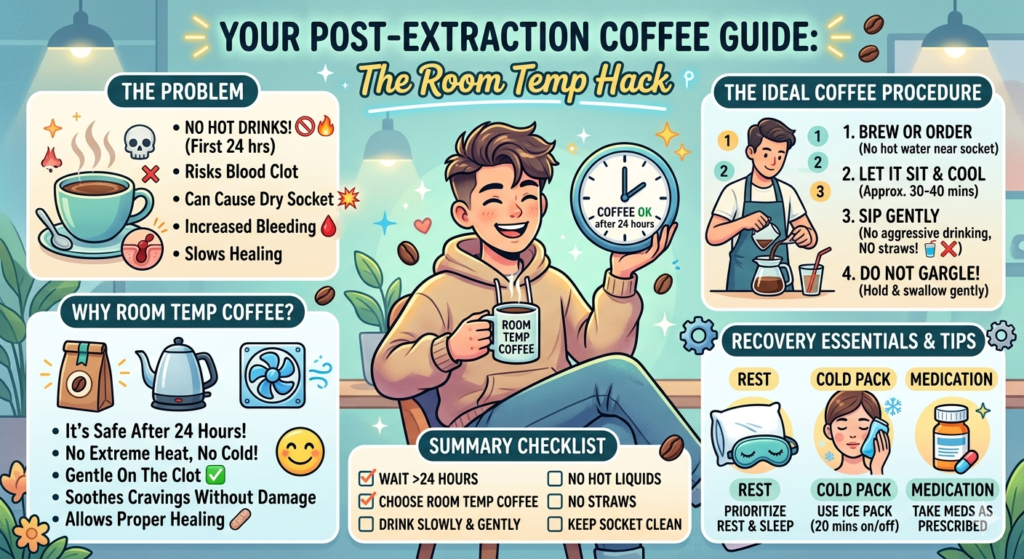
Can you drink room temperature coffee? Yes, but with a massive asterisk. Most dentists will tell you to wait at least 24 to 48 hours before introducing caffeine back into your life. If you’ve passed that initial window and your bleeding has stopped, room temperature coffee is much safer than a steaming hot latte.
But you can’t just chug it. There are “procedural” steps to make sure you don’t ruin your recovery.
Why the Temperature Actually Matters
You might be thinking, “It’s just coffee, why does the heat matter?”
When a tooth is pulled, your body’s first job is to form a blood clot in that empty socket. That clot is basically a biological Band-Aid. It protects the nerves and the bone while the gums start to knit back together.
Hot coffee is the enemy of the clot. Heat causes blood vessels to dilate (expand), which can dissolve that precious clot or prevent it from forming properly. If that clot gets dislodged or dissolves too early, you get the dreaded Dry Socket.
If you haven’t Googled “Dry Socket” yet, don’t. It’s basically peak physical agony. It happens when the bone and nerves are exposed to air, food, and liquid. Room temperature coffee is the “safe zone” because it doesn’t shock the surgical site or mess with the blood flow.
The “No Straw” Rule is Absolute
This is the part that kills me because I love an iced coffee with a straw. But after an extraction, straws are banned.
The suction created by using a straw is the #1 way people accidentally pull their blood clot right out of the socket. It’s like a tiny vacuum cleaner for your wound.
How to drink your room temp coffee:
- Take small, gentle sips directly from a cup.
- Don’t swish the liquid around the extraction site.
- Let the coffee roll over your tongue and swallow gently.
The Caffeine Factor (The Sneaky Villain)
It’s not just about the heat; it’s about the caffeine itself.
Caffeine is a stimulant. It can raise your blood pressure, which in turn can lead to increased bleeding at the extraction site during the first 24 hours. This is why most surgeons suggest sticking to water or apple juice initially.
If you’re someone who gets “caffeine headaches” (guilty as charged), try to hold out as long as you can. If you must have it, keep the portion small.
How to Prep Your Post-Op Coffee
If you’re at the 24-hour mark and you’re ready to risk it for the caffeine biscuit, here is the guide to doing it right:
1. The “Patience” Brew
Brew your coffee like normal, but then walk away. Let it sit on the counter for 30 to 45 minutes. You want it to feel neither warm nor cold, just neutral.
2. Skip the Additives (Maybe)
If you usually load your coffee with sugar or acidic syrups, maybe tone it down. Sugar can sometimes irritate the raw tissue. A splash of milk is usually fine, as long as it isn’t freezing cold.
3. The Hydration Sandwich
For every sip of coffee, take a sip of water. Keeping your mouth clean and hydrated is the fastest way to heal.
What About Iced Coffee?
Iced coffee is a bit of a “maybe.” Some people find the cold soothing, while others find it causes intense sensitivity.
If you go the iced route:
- No ice cubes near the wound: You don’t want a stray cube hitting the socket.
- Again, NO STRAW. I’m going to keep saying this until it’s burned into your brain.
Red Flags: When to Put the Mug Down
If you take a sip of your room temperature coffee and feel any of the following, stop immediately:
- Throbbing pain: This means the area is irritated.
- Fresh bleeding: If the area starts oozing red again, the caffeine or the liquid is messing with the clot.
- Sensitivity: If it feels like a lightning bolt hit your jaw, your nerves aren’t ready yet.
The Timeline of Healing
To give you a better idea of when you can go back to your “normal” coffee routine, here’s a rough breakdown:
- 0–24 Hours: Strict “No” on coffee. Stick to room temp water or very lukewarm broth.
- 24–48 Hours: Room temperature coffee is okay in small amounts. No straws. No heat.
- 3–5 Days: You can usually start moving toward “warm” (not hot) coffee.
- 1 Week+: Usually, you’re in the clear for your regular piping hot Starbucks run, but check with your dentist if you had a particularly rough surgery.
Final Thoughts from Someone Who’s Been There
Getting a tooth pulled sucks, and having to change your coffee habits on top of that feels like an insult to injury. But taking it slow for a few days is a small price to pay to avoid the week-long nightmare of a dry socket.
Think of it as a forced tolerance break. That first actual hot cup of coffee you have in a few days is going to taste like absolute heaven because you waited.
Stay hydrated, keep the gauze fresh, and for the love of everything, stay away from the straws.
Quick Summary Checklist:
- Wait at least 24 hours.
- Temperature should be “blah” (room temp).
- Sip gently from the rim of the cup.
- No straws, no chugging, no swishing.
- Listen to your body!
Happy healing, and may your caffeine headaches be brief!
FAQ: Your Coffee & Extraction Questions Answered
Q: Can I drink decaf?
Actually, decaf is a great middle-ground! You get the taste without the blood-pressure-spiking caffeine. Just keep it at room temperature.
Q: What happens if I accidentally used a straw?
Don’t panic! Check for bleeding. If the pain spikes or won’t stop, call your dentist. If it feels okay, count yourself lucky and put the straw in the trash.
Q: Can I have a latte?
Milk is fine, but dairy can sometimes leave a film in the mouth that bacteria love. Just make sure to rinse your mouth gently with plain water afterward.