We have all been there. It is 10:30 PM on a Tuesday. You are finally settling into your bed, the lighting is perfect, you’ve got your favorite show queued up, and suddenly, the craving hits.
Not for water. Not for a snack. You want the specific, roasty, comforting taste of coffee.
But you also have a 9 AM meeting or a class that you absolutely cannot miss. You know that if you touch a regular latte right now, you will be staring at your ceiling fan until the sun comes up, contemplating every awkward thing you said in middle school.
So, the question remains: Can you drink decaf coffee at night? Or is that tiny bit of remaining caffeine going to ruin your life the next morning?
As someone who is currently 22 and trying to figure out how to be a functional adult while also maintaining a very serious relationship with my coffee mug, I did the deep dive so you don’t have to.
Let’s get into the science, the vibes, and the actual reality of the nighttime decaf ritual.
Drinking Decaf Coffee at Night
The Science of Why We Crave It
There is something deeply psychological about coffee. For us, it’s not just a drink; it’s a personality trait.
When you are stressed or winding down, your brain looks for comfort cues. Coffee is associated with warmth, routine, and a sense of reward.
Drinking decaf at night is basically a glitch in the matrix for your brain. You get the sensory reward of the coffee taste and the warm mug in your hands, but without the chemical response that regular caffeine triggers.
It’s the ultimate cozy hack.
Will It Actually Keep You Awake?
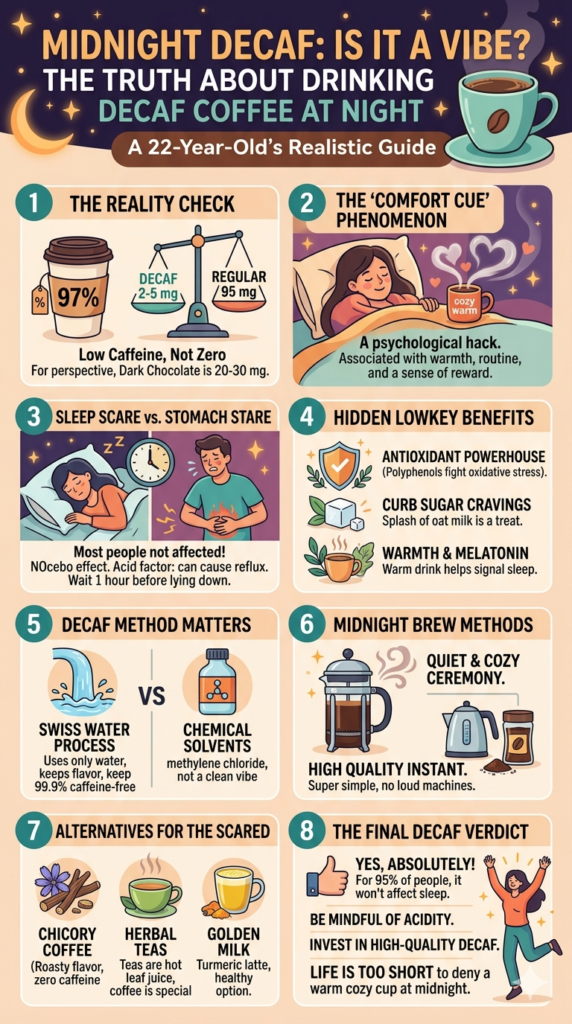
This is the million-dollar question. Will 2 to 5 milligrams of caffeine keep you up?
Honestly? Probably not.
To give you some context, a bar of dark chocolate can have around 20 to 30 milligrams of caffeine. A can of soda can have 35 milligrams. If you can eat a piece of chocolate after dinner and sleep like a baby, a cup of decaf is not going to be the thing that breaks you.
However, there is something called the nocebo effect. It’s the opposite of a placebo.
If you think the decaf is going to keep you awake, your brain might keep you in a state of high alert just because you’re worried about it. You end up psyching yourself out, staying awake because of the anxiety of being awake, not because of the coffee itself.
If you can go into your nighttime cup with the mindset of this is just warm bean juice, you are probably going to be fine.
The Perks of the Nighttime Cup
Believe it or not, there are actually some lowkey benefits to choosing decaf for your late-night Netflix binge.
First, antioxidants. Coffee (even the decaf kind) is packed with them. If you’re trying to be healthy-ish but don’t want to drink green juice at 11 PM, decaf is a solid choice. It’s got hydrocinnamic acids and polyphenols that help your body fight off oxidative stress.
Second, it’s a great way to curb late-night sugar cravings. A lot of times when we think we want a pint of ice cream, we actually just want a specific flavor or a ritual. A decaf coffee with a splash of oat milk can satisfy that I need a treat feeling without the sugar crash or the 2 AM regrets.
Third, the warmth. There is actual science behind warm drinks and sleep. A warm liquid can slightly raise your internal body temperature, and when your body cools back down afterward, it signals to your brain that it’s time to produce melatonin.
The Acid actor
Here is the one thing no one tells you about being 22: suddenly, your stomach has opinions.
Even if the caffeine doesn’t keep you awake, the acidity might. Coffee is naturally acidic. If you drink a big cup of decaf and then immediately lay flat on your back to sleep, you might deal with some nasty acid reflux or heartburn.
There is nothing less aesthetic than trying to fall asleep while feeling like there is a small fire in your chest.
If you’re going to do the midnight decaf, try to drink it at least an hour before you actually hit the pillow. Give your body some time to process it while you are still sitting upright. Your future self will thank you.
Swiss Water Process vs. The Chemicals
If you are really worried about what’s in your cup, you should look at how your coffee was decaffeinated.
Some cheaper brands use chemical solvents like methylene chloride to strip the caffeine away. While it’s considered safe by the government, it’s not exactly the clean vibe most of us are going for.
If you want the best experience, look for Swiss Water Process decaf. It uses only water, temperature, and time to remove the caffeine. It usually tastes way better and keeps more of the original coffee flavor without any chemical aftertaste.
Plus, it’s usually 99.9% caffeine-free, which is even better for your sleep schedule.
The Best Way to Brew at Night
If you’re making coffee at 10 PM, you probably don’t want to be running a loud, grinding machine that wakes up your roommates or your parents.
This is the perfect time for the slow brew methods we talked about earlier.
A French Press is perfect for decaf at night. It’s quiet, it’s intentional, and it feels like a little ceremony.
Or, if you really want to keep it simple, a high-quality decaf instant coffee (yes, they exist now) is a total lifesaver. You just boil the kettle, stir, and you’re back in bed in three minutes.
Alternatives if You’re Still Scared
If you read all of this and you’re still worried that you’re too sensitive to caffeine, you have options.
You can try herbal coffee blends. These are usually made from things like chicory root, barley, or dandelion root. They don’t have a single drop of caffeine, but they have that dark, bitter, roasty flavor that coffee lovers crave.
Chicory coffee, specifically, is a huge vibe. It’s super popular in New Orleans and has a really rich, earthy taste that honestly hits the spot when you want a heavy drink but don’t want the heart palpitations.
There is also the classic Golden Milk (turmeric latte) or a simple herbal tea. But let’s be real—sometimes tea just feels like hot water with a leaf in it. When you want coffee, you want coffee.
What Is Decaf Actually?
I used to think decaf was just coffee that had the energy sucked out of it by some kind of magic. But if we are being real, we need to talk about the numbers.
Most people assume decaf means zero caffeine. Total lie.
According to the FDA and basically every coffee scientist ever, decaf coffee usually has about 97% of its caffeine removed. That sounds like a lot, and it is. But it isn’t 100%.
To put that into perspective, a standard 8-ounce cup of regular coffee has around 95 milligrams of caffeine. A cup of decaf usually has about 2 to 5 milligrams.
For most people, that is a rounding error. It’s like the difference between a roar and a whisper. But if you are one of those people who gets the jitters just by smelling a coffee bean, that tiny 3% might actually matter.
The Final Verdict
So, can you drink decaf coffee at night?
The short answer: Yes. Absolutely.
For 95% of the population, the tiny amount of caffeine in decaf isn’t going to do anything to your sleep cycle. It is a great way to enjoy the ritual of coffee without the consequences of regular beans.
Just be mindful of the acidity, don’t overthink the 3% caffeine rule, and maybe invest in some high-quality Swiss Water beans so it actually tastes good.
Life is too short and adulthood is too expensive to deny yourself the small joy of a warm cup of coffee while you watch the stars (or your phone screen) at midnight.
Go make the cup. You deserve it.
Your morning self will be fine, and your tonight self will be very, very cozy.